
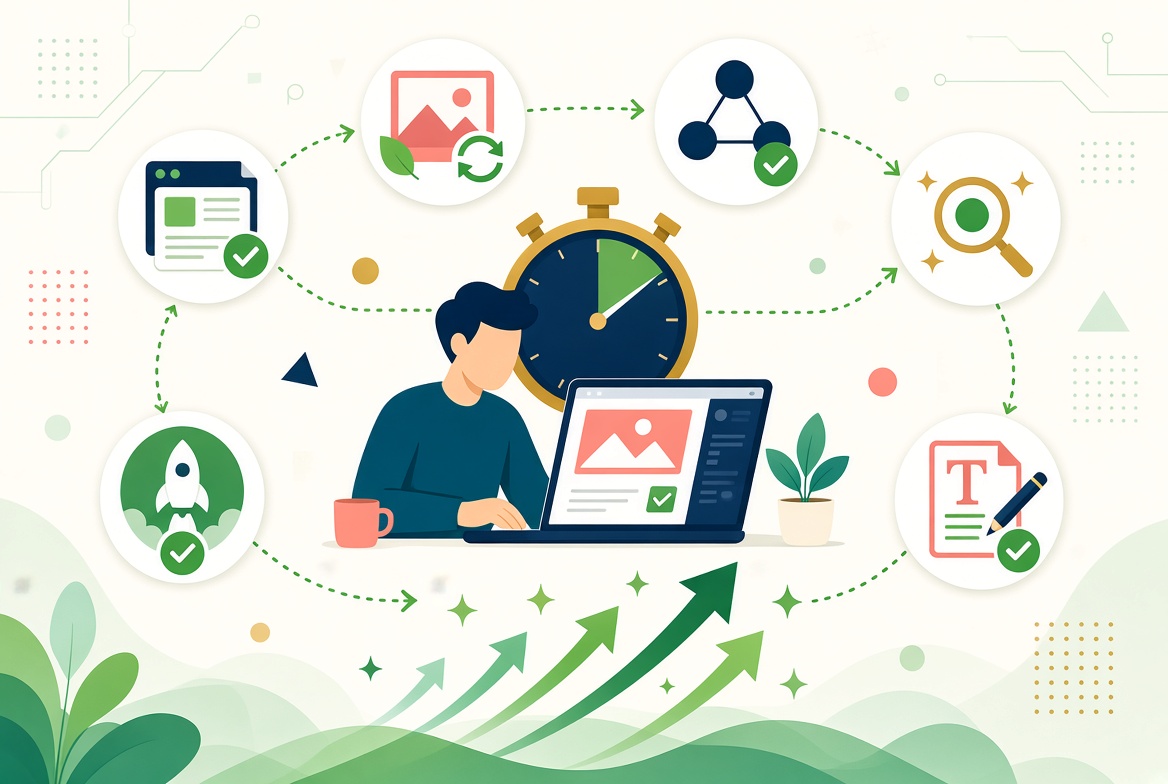
Search engine optimization has entered its most transformative era yet. With the rise of AI-driven search, voice and visual discovery, and Google’s Search Generative Experience (SGE) reshaping how results are presented, SEO in 2026 is no longer just about keywords and backlinks — it’s about experience, intent, and authority.
If you’re still optimizing for 2022 algorithms, you’re already behind. Search is now multi-modal (text, voice, video, and image-based) and personalized by AI models that evaluate trust, user satisfaction, and topical authority more than ever before.
At AriHub, we’ve helped clients stay ahead of every major algorithm change — from RankBrain and BERT to MUM and now Gemini-powered SGE. This in-depth guide reveals the most advanced SEO strategies for 2026, combining human creativity with machine intelligence to future-proof your brand’s visibility.
🧠 1. The New SEO Landscape: What’s Changed in 2026
Before diving into advanced strategies, let’s clarify what SEO looks like now.
1.1 Google’s AI-Driven Search (SGE & Gemini Integration)
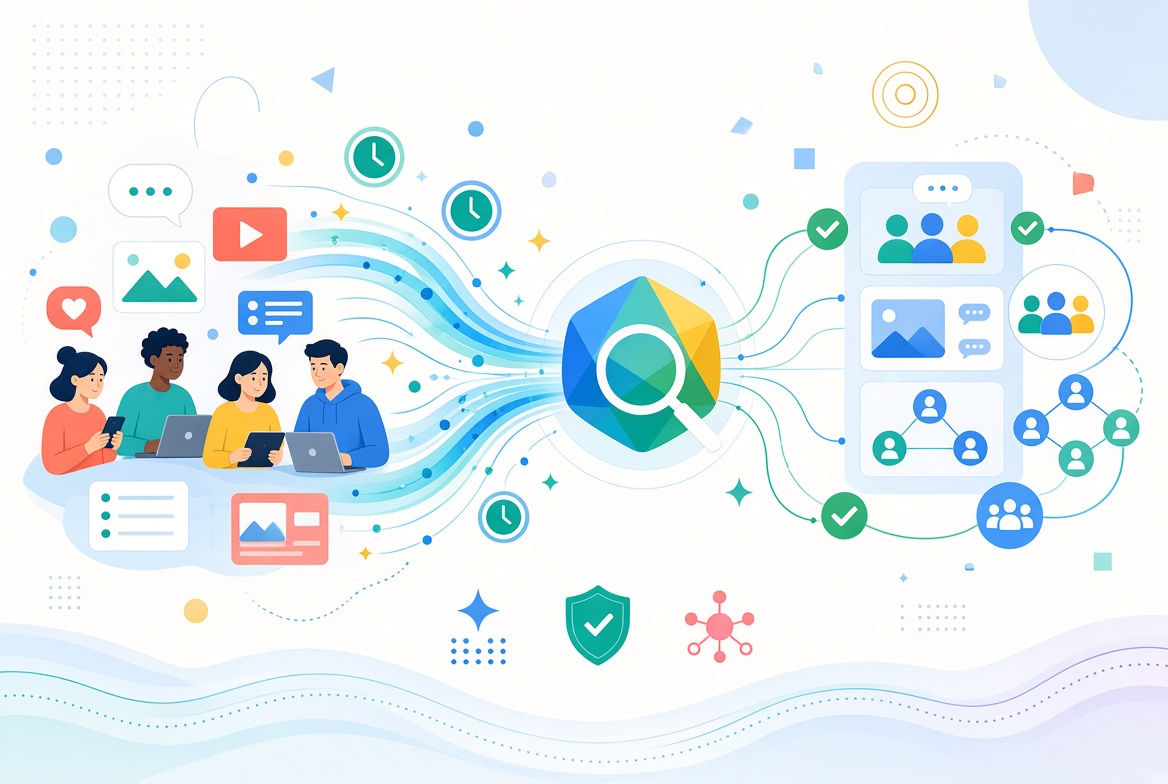
Google’s Search Generative Experience (SGE) uses generative AI to produce contextual summaries at the top of search results. Instead of ten blue links, users now see AI-generated overviews, interactive follow-up questions, and source citations.
This means:
✅ Traditional organic clicks are decreasing (zero-click searches).
✅ Visibility inside AI summaries is now as important as ranking #1.
✅ Structured data, author expertise, and topical relevance drive inclusion.
💡 AriHub Insight: Ranking on the AI layer of Google is the new frontier. SEO now includes optimization for generative summaries.
1.2 Search Is Multi-Modal
Google Lens, voice search, and “Circle to Search” on mobile are changing discovery. Users can search using images, videos, or voice commands, and Google interprets context rather than keywords.
Implication: You must optimize across formats — text, image, and video — with strong metadata and accessibility tags.
1.3 The Rise of E-E-A-T 2.0
E-E-A-T — Experience, Expertise, Authoritativeness, and Trustworthiness — remains central, but 2026 has brought E-E-A-T 2.0, where authorship verification and brand reputation signals (mentions, citations, reviews) weigh more heavily in ranking algorithms.
1.4 Personalized & Predictive Search
With AI and user history integration, Google tailors results to individual users.
Personalized ranking factors now include:
✅ User’s location and device type
✅ Prior interactions with your brand
✅ Topical interest clusters
🧭 AriHub Tip: Your SEO strategy must now include audience-level optimization, not just keyword targeting.
⚙️ 2. Core Principles of Advanced SEO in 2026
Advanced SEO is built on four new pillars: Context, Entities, Experience, and Automation.
2.1 Context Over Keywords
Keywords still matter, but Google now interprets context and intent using natural language models.
✅ Focus on topic clusters, not individual terms.
✅ Map content to search journeys instead of isolated queries.
Example: Instead of writing for “best CRM software,” create a cluster around:
- “What is CRM software?”
- “CRM features explained”
- “Best CRMs for startups”
- “How to choose a CRM for your business”
2.2 Entities and Knowledge Graph SEO
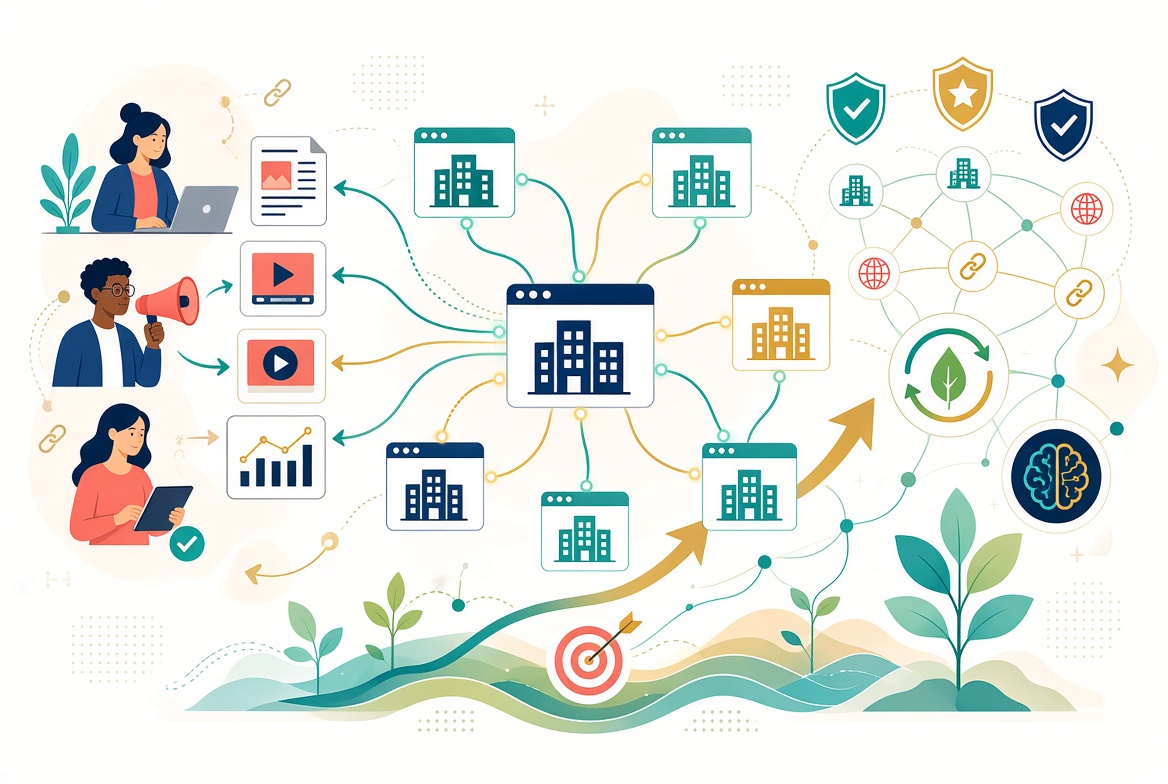
Search engines now understand entities — people, places, brands, and concepts — and how they connect.
To optimize for entities:
✅ Use structured data (Organization, Person, Product schema).
✅ Maintain consistent brand mentions across the web.
✅ Claim and verify your entity in Google’s Knowledge Graph (via Wikidata, Crunchbase, etc.).
🧩 AriHub Tip: Build your site like a knowledge hub — interlink related concepts to show semantic authority.
2.3 Experience Optimization
Google’s Helpful Content System now measures user satisfaction signals directly from engagement metrics (scroll depth, dwell time, repeat visits).
To improve experience:
✅ Prioritize page speed, design, and mobile performance.
✅ Use AI-driven content personalization.
✅ Add interactivity (calculators, quizzes, polls).
2.4 SEO Automation and AI Integration
AI tools now handle large-scale SEO tasks:
- Keyword clustering (using machine learning)
- Content scoring for semantic completeness
- Predictive ranking analytics
Tools to Use:
- SurferSEO AI (topic optimization)
- Jasper / Writesonic (AI copy)
- Ahrefs / Semrush + ChatGPT (data synthesis)
- Screaming Frog with API automation
⚙️ AriHub Strategy: Use automation for data collection, not decision-making. Human oversight ensures content aligns with brand voice and E-E-A-T.
🔍 3. Advanced Keyword & Intent Strategies
3.1 Semantic Keyword Mapping
Traditional keyword research is outdated. Now, we focus on semantic clusters — groups of related phrases sharing intent.
Example cluster for “SEO strategy”:
- advanced SEO techniques
- modern SEO trends
- how AI affects SEO
- future of search engine optimization
Use AI tools like ClusterAI or Keyword Insights to automate grouping.
3.2 Target “Conversational Queries”
With voice and AI-driven search, conversational phrasing dominates:
✅ “How do I improve my SEO in 2026?”
✅ “What’s the best strategy for ranking in AI search?”
Optimize headers (H2s) as questions and give concise, fact-based answers to increase SGE inclusion.
3.3 Optimize for Search Journeys
Instead of chasing one keyword, build content paths:
1️⃣ Awareness (blog): “What is AI SEO?”
2️⃣ Consideration (guide): “AI vs. traditional SEO comparison.”
3️⃣ Decision (landing page): “Hire an AI SEO agency.”
Map internal links to move users — and bots — through the funnel.
3.4 Use Predictive Search Data
Leverage Google Trends and AI analytics to anticipate emerging queries before competitors.
✅ Use AI models like ChatGPT to brainstorm potential “next-wave” topics.
✅ Combine with AnswerThePublic or Semrush Topic Research for question-based expansion.
🧱 4. Advanced On-Page SEO Techniques
4.1 Optimize for SGE and AI Summaries
To appear in AI-generated overviews:
✅ Write factually accurate, well-cited content.
✅ Use clear structures: H2s, lists, and data points.
✅ Provide quick, answer-ready content near the top.
✅ Add schema for context (FAQ, Article, HowTo).
🧩 AriHub Tip: Write 50–75 word “summary blocks” under key headings — AI models extract these as snippets.
4.2 Enhanced Schema and Entity Markup
Use structured data not just for SEO, but to train AI how to interpret your content.
Must-have schemas in 2026:
- Organization
- Author / Person
- Product
- Review
- FAQPage
- VideoObject
- ImageObject
Tool: Schema Pro or Rank Math AI Assistant.
4.3 Dynamic Internal Linking
Leverage AI-based link suggestion tools like Link Whisper or internal APIs to:
✅ Connect topic clusters automatically.
✅ Pass authority between related pages.
✅ Maintain freshness by updating anchor text periodically.
4.4 Content Design for Readability
User-friendly content = higher engagement = better rankings.
✅ Use visual breaks (short paragraphs, icons, tables).
✅ Add TL;DR summaries.
✅ Include AI-generated infographics or short explainers.
4.5 Optimize for Featured Snippets and People Also Ask
- Use “question H2s” (What, Why, How).
- Answer concisely in 40–50 words.
- Add a FAQ schema to improve visibility.
📈 AriHub Data: 32% of featured snippets in 2026 are pulled from structured FAQ content.
🔗 5. Advanced Technical SEO Strategies
5.1 Optimize for Core Web Vitals 2.0
Google’s updated metrics in 2026 now include INP (Interaction to Next Paint) and CLS Stability Index.
Targets:
| Metric | Ideal Value | Focus |
|---|---|---|
| LCP | <2.5s | Fast loading |
| CLS | <0.1 | Layout stability |
| INP | <200ms | Responsiveness |
⚙️ AriHub Tip: Use CDNs (Cloudflare, Bunny.net) and script deferral to reduce interaction lag.
5.2 Crawl Budget Optimization
Large sites must ensure efficient indexing.
✅ Remove duplicate or thin pages.
✅ Use robots.txt wisely.
✅ Implement dynamic sitemaps that update automatically.
Tools: Screaming Frog, Sitebulb, JetOctopus.
5.3 Log File Analysis
Analyze server logs to see how Googlebot interacts with your site.
✅ Identify wasted crawl resources.
✅ Detect orphan pages.
✅ Monitor indexation frequency.
🧠 AriHub Insight: Log analysis reveals crawl waste invisible to analytics tools — essential for enterprise SEO.
5.4 Advanced Image and Video SEO
Image Optimization:
✅ Use WebP/AVIF formats.
✅ Add descriptive alt text and schema.
✅ Embed context via captions and filenames.
Video Optimization:
✅ Host on YouTube or Wistia (indexed faster).
✅ Use VideoObject schema.
✅ Add transcripts for accessibility and AI indexing.
5.5 Edge SEO and Server-Side Rendering
Advanced developers use Edge SEO via CDNs to modify content and metadata in real-time.
✅ Deploy redirects, hreflang, and schema at scale.
✅ Use Cloudflare Workers or Akamai Edge for dynamic SEO testing.
📲 6. Mobile, Voice, and Visual Search Optimization
6.1 Voice Search Optimization
Voice queries are now 40% of all mobile searches.
✅ Target conversational keywords (“How do I…,” “What’s the best way to…”).
✅ Use schema to feed structured answers.
✅ Keep responses concise and natural.
6.2 Visual Search (Google Lens & Circle to Search)
Optimizing for visual discovery requires:
✅ High-quality original imagery.
✅ Descriptive filenames and EXIF metadata.
✅ Consistent branding in image backgrounds.
🧩 AriHub Insight: In 2026, 25% of product-related queries begin with image search.
6.3 Mobile Experience
Beyond responsiveness, interaction speed and scroll behavior influence rankings.
✅ Use AMP alternatives like Web Stories for quick visual guides.
✅ Add sticky CTAs for mobile conversions.
🔗 7. Authority Building and Off-Page SEO
7.1 Digital PR & Entity Mentions
Traditional link building is evolving into mention building — unlinked brand mentions still pass entity authority.
Strategies:
✅ Publish original research and reports.
✅ Contribute to podcasts, panels, and webinars.
✅ Use HARO and Qwoted for expert quotes.
7.2 Building Topic-Level Authority
Google now ranks topic experts, not just websites.
✅ Create deep content clusters around core themes.
✅ Maintain consistent terminology and interlinks.
✅ Add expert bios and author schema.
7.3 Reputation Management
E-E-A-T signals include brand perception and review ratings.
✅ Monitor online sentiment using Brand24 or Mention.
✅ Optimize your Google Business Profile.
✅ Encourage reviews on industry platforms.
🧠 AriHub Tip: Positive review volume can directly influence “trust” ranking signals in localized SERPs.
📊 8. AI and Automation in SEO
8.1 AI for Content Optimization
AI tools can assist — not replace — human writers.
✅ Use NLP-based scoring (SurferSEO, Clearscope).
✅ Let AI suggest subtopics and FAQs.
✅ Always human-edit for tone and accuracy.
8.2 Predictive SEO Analytics
Machine learning predicts traffic trends and ranking volatility.
✅ Use predictive dashboards (Looker Studio + GA4 data blending).
✅ Forecast seasonal changes and algorithmic shifts.
8.3 Programmatic SEO
Generate thousands of landing pages automatically with unique metadata.
Best for:
✅ E-commerce filters (e.g., “Shoes under $100”)
✅ Location pages (e.g., “SEO agency in Dallas”)
⚙️ AriHub Tip: Pair programmatic SEO with dynamic schema and AI-written meta descriptions to scale safely.
🧩 9. Content Refresh and Lifecycle Optimization
Even evergreen content decays over time.
9.1 Content Decay Analysis
Track declining traffic in GA4 and GSC.
✅ Identify “stale” posts losing visibility.
✅ Refresh every 6–12 months with new data, links, and visuals.
9.2 Add Interactive Elements
Static articles are fading. Add:
✅ Calculators (ROI, savings, etc.)
✅ Step-by-step visuals
✅ Embedded polls
Engagement boosts dwell time and reduces pogo-sticking.
9.3 Build an “Update Calendar”
Create a content maintenance plan.
✅ Quarterly audits for top 20% pages.
✅ Annual review for evergreen posts.
🧠 10. Data-Driven SEO: Analytics & KPIs
Advanced SEO decisions require actionable metrics, not vanity numbers.
| Metric | What It Reveals | Tool |
|---|---|---|
| Organic Click-Through Rate | SERP performance | GSC |
| Dwell Time & Scroll Depth | Engagement | GA4 |
| Entity Mentions | Authority | Brand24 |
| Indexed Pages vs. Submitted | Crawl efficiency | GSC |
| Conversion Rate from Organic | ROI | GA4 / CRM |
💡 AriHub Tip: Focus on SEO ROI — conversions and lifetime customer value, not just traffic volume.
🔮 11. Future-Proofing Your SEO Strategy
11.1 AI Collaboration, Not Competition
Embrace AI as a tool to enhance — not replace — human expertise. Use it for efficiency, but rely on human creativity and insight for originality.
11.2 Multi-Channel Visibility
Diversify your visibility beyond Google:
✅ Optimize for YouTube, TikTok, and LinkedIn.
✅ Use transcriptions to make video content indexable.
✅ Build topical authority across multiple platforms.
11.3 Continuous Experimentation
Run controlled SEO experiments:
- A/B test meta titles.
- Compare schema types for CTR.
- Track AI inclusion rates in SGE.
🧩 AriHub Mindset: Treat SEO like science — hypothesis, test, measure, iterate.
✅ 12. Key Takeaways
| Focus | Strategy |
|---|---|
| SGE Optimization | Structure content for AI summaries and rich snippets. |
| Entity SEO | Build consistent brand and author profiles. |
| Experience Metrics | Prioritize Core Web Vitals, UX, and engagement. |
| Automation | Use AI for scale, not strategy. |
| Authority Building | Focus on expertise, citations, and mentions. |
| Analytics | Let data guide every optimization decision. |
🎯 AriHub Rule: “In 2026, SEO isn’t just about ranking on Google — it’s about earning trust across the digital ecosystem.”
🏁 Conclusion: The Future Belongs to the Adaptive
SEO in 2026 is a blend of technology, creativity, and trust. Those who embrace AI intelligently, focus on user experience, and continuously optimize for new search behaviors will thrive — while those clinging to outdated tactics will fade into invisibility.
At AriHub, we specialize in crafting future-ready SEO strategies that combine deep analytics, automation, and human expertise. From entity optimization to AI-driven keyword intelligence, our goal is simple: to keep your brand ahead of every algorithmic curve.
📩 Ready to Elevate Your SEO Strategy for 2026?
Let AriHub help you build an AI-optimized, data-powered SEO framework that dominates the next generation of search.
Our services include:
- Advanced SEO strategy and entity optimization
- SGE and AI-search readiness audits
- Technical SEO and automation setup
- Evergreen and authority content creation
👉 Contact AriHub Today to future-proof your SEO and stay visible in the AI-driven search revolution.

Leave a Reply
You must be logged in to post a comment.