
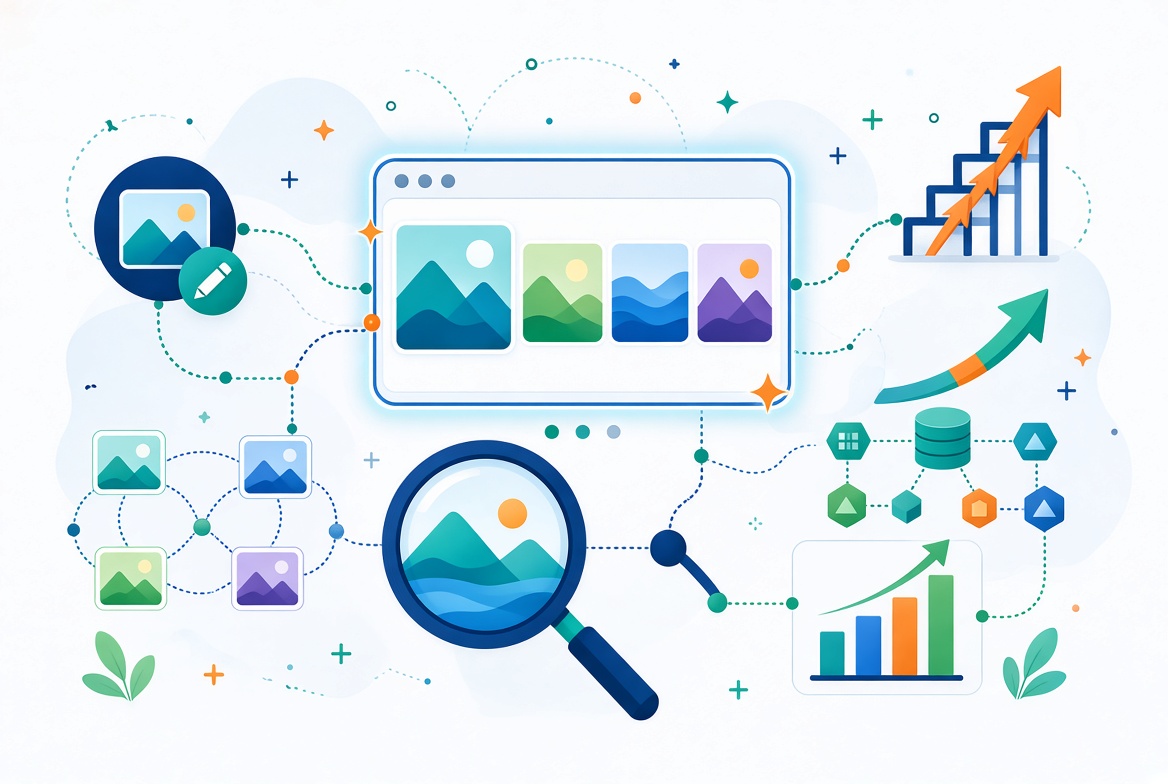
The Future of SEO in the AI Era: We are entering a new chapter of search – one in which artificial intelligence (AI), large language models (LLMs), and generative interfaces will radically reshape how people find information, how search engines deliver it, and consequently how websites gain visibility. The era of simple keyword-ranking optimisation is giving way to what many experts call “Generative Engine Optimisation (GEO)”, “Answer Engine Optimisation (AEO)” or just a fundamentally new form of “SEO” in the Google LLC-dominated ecosystem.
For businesses and marketers working with AriHub, this means not only refining old techniques but entirely rethinking strategy: from content creation, to technical infrastructure, to measurement. In this 2026 forward-looking guide, we explore how SEO is transforming, why it remains crucial, and how to prepare your brand for survival and growth in the AI era.
⚙️ 1. Why SEO Is Changing — and Why It Still Matters
AI search isn’t just a variation on old search engines — it’s a pivot in how information is delivered.
- Research from Search Engine Journal found that websites ranking in the top 10 of Google still have a significantly higher chance of appearing in AI-powered search answers (e.g., via ChatGPT, Perplexity, or Google’s AI Overviews) than those outside the top 10.
- AI Overviews (the summaries and answer boxes generated by Google and other AI platforms) are increasingly common, reducing click-through from traditional search result pages.
- The idea that “SEO is dead” is premature; rather, it is evolving to meet new search behaviours, new platforms, and new kinds of visibility metrics.
In short: ranking well on Google is still relevant, but the mechanisms by which visibility is achieved — and how value is delivered to users — have shifted. For brands working with AriHub, this means building strategies that address both traditional SEO fundamentals and the emerging AI search paradigms.
🔮 2. Key Trends Shaping SEO in the AI Era
Let’s explore some of the major developments driving change.
2.1 Generative Search & AI Overviews
Search is becoming conversational and synthesised. Rather than returning a list of blue links, search engines increasingly present summarised answers, often powered by LLMs, for many queries.
Implications for SEO:
- Websites may generate less direct page-click traffic as users get answers on the search engine’s interface.
- Visibility in these summary boxes becomes as important (or more) than ranking first in the traditional list.
- The role of schema, structured data and content designed for “answer-first” formats becomes critical.
2.2 Semantic Search & Intent Understanding
AI models have vastly improved at interpreting user intent, semantics, and context — going beyond mere keyword matching.
Implications:
- Content optimisation must focus less on individual keywords and more on topics, entities and intent.
- A single page may need to address multiple sub-questions or related intents to maximise relevance.
- Internal linking, topical clusters and content architecture gain importance.
2.3 Automation & AI-Assisted SEO Workflows
AI tools are increasingly used for research, audit, content generation, and even optimisation.
Implications:
- Marketers need to adopt and integrate AI tools to stay competitive.
- But: AI won’t replace the need for original insight, unique experience and brand voice. The edge will be in how well you use the tools, not just that you use them.
- Expect audit, speed, mobile/usability checks, schema suggestions, and even live optimisation to be partly automated.
2.4 New Visibility Metrics & Declining Clicks
With the rise of “zero-click” searches (users get answer without clicking), tracking traditional indicators becomes harder.
Implications:
- Brands must focus more on brand visibility, mentions, citation, and authority rather than just click-throughs.
- Measurement frameworks need to evolve to account for views, impressions, agent-interactions and off-site signals.
2.5 Multi-Platform Search & Voice/Visual Interfaces
Search is no longer just on Google’s desktop interface. AI search is increasingly voice-driven, visual, and taking place in diverse environments (smart speakers, AR/VR, chatbots).
Implications:
- Optimisation strategies must account for voice queries (“how to fix…”, “what is…”), visual search triggers (image, video), and cross-platform discovery.
- Structured data, video transcripts, alternative formats become more important.
🧱 3. What the “New SEO” Should Focus On
Given these shifts, here’s how AriHub recommends structuring your future-proof SEO strategy.
3.1 Build Topic Authority, Not Just Keyword Pages
Instead of isolating individual keywords, build content clusters around core themes. For example, rather than “best CRM software 2026”, develop a pillar page “CRM software guide for small business” with supporting articles on sub-topics (integration, pricing, mobile features, etc.).
This approach aligns with semantic search and positions your site as an authority. It also helps AI engines draw from a cohesive set of pages when summarising answers.
3.2 Create High-Intent, Deep Content That AI Struggles To Replicate
AI can generate content, but it struggles with original research, unique case studies, domain-specific experience, and brand storytelling.
Action steps:
- Use expert interviews, unique data or insights, real user stories.
- Write in a human voice with depth and nuance.
- Structure content to answer specific, high-intent queries (e.g., “how to migrate CRM for real estate brokers”) rather than shallow informational articles.
3.3 Optimise For “Answer First” and Agent Interfaces
Your content should not only aim to rank but be selected by LLM-powered answer engines as the source for summaries.
How to do this:
- Use clear headings, question-and-answer formats.
- Implement structured data (FAQ, HowTo, Q&A) to aid extraction.
- Provide concise, factual summaries near the top of pages for quick relevance.
- Ensure your brand is cited as an authority and third-party references link to you.
3.4 Prioritise Technical SEO & Structured Data
Efficiency, speed and machine readability are paramount. AI systems and modern search engines favour content that is accessible, structured and fast.
Key areas:
- Mobile-first design, fast page speed, Core Web Vitals.
- Clean crawl architecture, sitemap, robots.txt accuracy.
- Schema markup for articles, videos, products, organisations.
- Managing feeds (shopping feeds, local business feeds) as search expands into AI mode.
3.5 Expand Beyond Google: Voice, Visual, Chat, Agents
Because search surfaces now include chatbots, voice assistants, and visual discovery, your SEO strategy must diversify.
Practical tactics:
- Optimise for long-tail conversational queries (“what’s the best CRM if I’m a small business owner in Norway?”).
- Use alt text and structured data for images; include video transcripts.
- Explore presence in platforms like YouTube, Pinterest, and emerging LLM-search engines.
- Build brand-centric presence so that AI agents referencing you are likely to show your content when users ask questions.
3.6 Build Brand and Authority More Overtly
As AI engines increasingly rely on trusted, authoritative sources, a broad visibility strategy becomes essential.
Tactics include:
- Earn citations and brand mentions in reputable publications.
- Maintain consistent brand descriptions, social presence and knowledge graph data.
- Invest in media relations, digital PR and authentic influencer or expert collaborations.
- Engage in community, forums, Q&A platforms to build trust signals.
📊 4. New Metrics & Measurement in the AI Era
Traditional metrics (rankings, organic clicks) are no longer sufficient. You’ll need to adopt new KPIs and tracking frameworks.
4.1 Beyond Clicks: Visibility in AI Contexts
If an AI Overview uses your page as a source, you may not get a click, but you gain authority. Metrics to track:
- Brand mention rate in AI answers (requires specialised tools).
- Impressions in zero-click environments.
- Engagement depth (time on page, scroll depth, repeat visits).
4.2 Engagement & Conversion Rather Than Just Traffic
Focus on how users interact after they land, or if they engage via other channels. For example:
- Conversions attributable to organic content (newsletters, downloads, leads).
- Return visitor ratio, loyalty metrics.
- Assisted traffic from organic to other channels.
4.3 Measuring Structured Data & Feed Impact
As structured data and feeds become more important:
- Track how many pages have valid schema and whether that correlates with higher visibility.
- For merchant sites, track how shopping feeds perform in AI-driven shopping modes.
4.4 Diversified Channel Attribution
Given that search environments are expanding beyond Google’s SERP, track:
- Voice assistant interactions (if available).
- Visual search referrals (image, AR).
- Traffic & citations from AI answer platforms, chatbots.
- Brand lifts via surveys or controlled experiments (especially when clicks are not easy to measure).
🧠 5. Challenges & Risks for SEO in the AI Era
While the future is rich with opportunity, there are risks to navigate.
5.1 Increased Competition for Fewer Clicks
With AI summarising information before users click, some categories (especially purely informational) may see reduced traffic.
5.2 Black-Box Visibility & Rank Tracking Limitations
AI search may not provide transparent ranking data. For example, Google’s AI Mode has been reported to send little to no tracking data into Search Console.
5.3 Automation Overload & “Content-Factory” Risk
As AI tools make content creation easier, the web may saturate with low-quality, generic content. To stand out, brands must invest in originality, depth and trust.
5.4 Ethical, Privacy & Bias Concerns
AI models may favour large brands, certain content types, or lack transparency on why a source was chosen. Also, data privacy, access, and algorithmic bias pose challenges.
5.5 Over-Reliance on a Single Platform
If your SEO strategy depends purely on visibility in Google’s list results, you risk being disrupted. Diversification — across platforms, formats, channels — is more important than ever.
📘 6. A Practical Roadmap: How AriHub Recommends Preparing Your Website
Here’s a step-by-step roadmap to future-proof your SEO.
Phase 1: Audit & Foundation
- Conduct a full technical SEO audit (mobile, speed, crawlability, schema).
- Map your core topics and create content clusters.
- Ensure structured data markup is correctly implemented (Article, FAQ, HowTo).
- Review your brand mentions and domain authority; build a citation plan.
Phase 2: Content Strategy Re-calibrated for AI
- Identify high-intent questions your audience asks (especially long-tail, conversational).
- Develop content that answers those questions in depth, includes unique data, and is structured for readability (headers, Q&A sections).
- Design for multiple formats: text, video, interactive, voice snippets.
- Promote to earn quality backlinks, citations, and brand mentions (not just raw link-building).
Phase 3: Visibility & Diversification
- Optimise for voice search, visual search, and chat-agent environments.
- Expand presence on alternative search & discovery platforms (YouTube, Pinterest, Reddit, niche forums).
- Monitor how your content is cited or selected in AI answer environments using emerging tools.
- Use structured data and feeds (especially for e-commerce, local business, services).
Phase 4: Measurement, Adaptation & Innovation
- Shift KPIs from “ranking position” to “visibility, engagement, conversion, authority”.
- Use analytics tools to track deeper signals (scroll depth, repeat visits, brand lift).
- Run controlled experiments to test new content types, formats and value propositions.
- Regularly update older content (given faster change cycles in AI-led search).
- Stay alert for emerging platforms (AI chatbots, agentic tools, AR search) and be ready to experiment.
🔭 7. Future Glimpses: What Comes Next?
What further changes might we see in the coming years?
- Agentic AI & Autonomous Search: Research into Agentic AI Optimisation (AAIO) suggests websites will need to optimise not just for human users, but for AI agents that act on behalf of users.
- Quantum & Real-Time Search: As computing advances (including quantum computing), search may become even more instantaneous, personalised and context-rich. This could further change how visibility works.
- Invisible Interfaces: Search may become so integrated (in voice assistants, AR devices, smart environments) that traditional “search results pages” vanish and websites become data nodes for AI responses.
- Brand + Entity Dominance: With AI relying heavily on trust, brand recognition and entity authority may become even more important than exact keywords.
- Content as Platform: Instead of only pages, your site might become a content hub for interaction (chat, voice, AR experiences) and not just passive reading.
🏁 Final Thoughts: The Future of SEO in the AI Era
The future of SEO in the AI era is not about abandoning Google or organic search, but about adapting. It’s about refining the fundamentals (useful content, technical excellence, authority) and embracing new paradigms: topic clusters over keywords, answer-first formats over ranking obsession, brand and entity visibility over pure link count, and diversified discovery channels beyond the conventional SERP.
At AriHub, we believe that brands who lean into this shift — who build content with questions in mind, structure experiences for humans and machines, and measure success in richer ways — will not just survive but thrive in the coming age.
🔗 Ready to future-proof your SEO strategy with AI in mind? Let AriHub design a roadmap tailored to your business that bridges today’s best practices with tomorrow’s search reality.



Leave a Reply
You must be logged in to post a comment.